Navigating the Digital Tide: My Evolving Relationship with Technology

From Reluctance to Adaptation
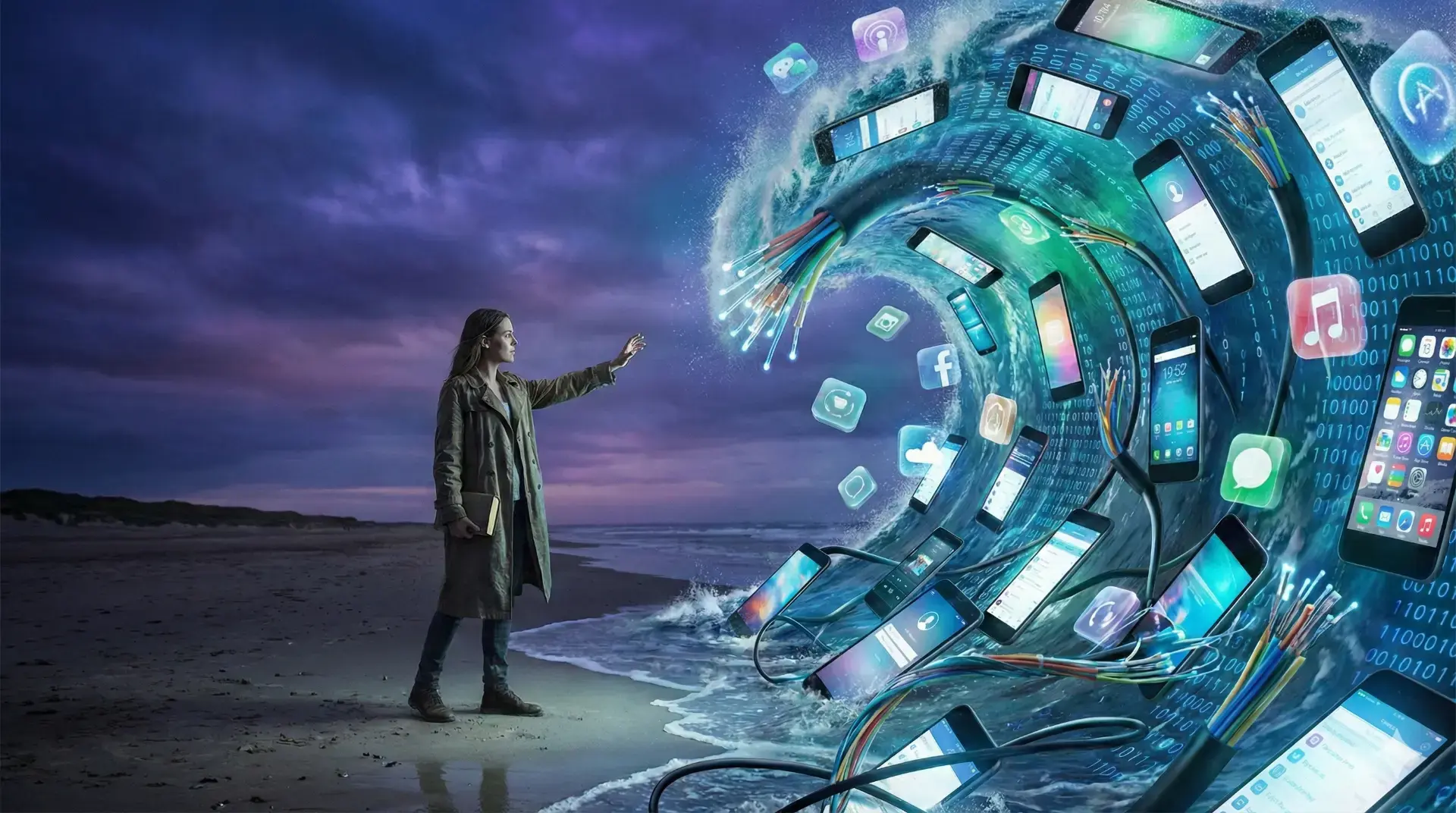
Through the years, I’ve had a tenuous relationship with technology and social media. I was the last of my friends to accept texting. Looking back, I laugh—now I prefer a text over a call. It’s easier to check, especially when work or other responsibilities make phone calls difficult. This adaptation shows how I’ve changed with technology, but also how much less available I am for real conversations due to having so many digital ones each day. Life feels faster now bringing increased potential for overstimulation.
Remembering Life Before Smartphones
How did we manage before smartphones? How did I communicate with my high school boyfriend? How did we make plans? It’s hard to remember how we got anything done. There was a slowness to life that brought lots of time for spaciousness and to be with one’s thoughts and creativity.
The Anxiety of Constant Accessibility
I hear from clients that the thought of not being accessible 24/7 causes anxiety. Is it even an option anymore to be phone-free for extended periods? Certainly, the answer is yes, and this takes discipline, trust and letting go.
Entering the AI Frontier and Therapy
AI is a whole new frontier. I feel like a late bloomer again, even though this isn’t new technology. The debates are still hot. I’m digging into how I feel about it. My humble opinion won’t change AI’s status in the world, but it’s important to consider how it feels internally. Technology has a role in our world. Used with intention and discernment, it is a wonderful tool for countless things. It can solve problems, but it can also create them. There is a shadow side to everything. I will share my thoughts on AI as a replacement for therapy with a therapist.
What AI Can Offer
Reflection and mirroring of emotional tone and cognitive distortions back to the user, 24/7 accessibility, non-judgmental space, and data-driven insights.
What AI Cannot Offer (Limitations and Risks)
Lack of human empathy: AI lacks true human empathy and cannot replace the nuanced understanding and emotional resonance of a human therapist. This can limit its effectiveness in deep trauma work or complex emotional processing.
Over-reliance: Users may become dependent on AI for emotional regulation, bypassing the development of internal coping mechanisms.
Privacy concerns: Sensitive data shared with AI systems may be vulnerable to misuse or breaches, depending on the platform’s security and ethics.
Symbolic inflation: AI can mirror back symbolic structures, but without grounding, this can lead to unintegrated insights or spiritual bypassing.
In summary, AI can serve as a mirror but not a healer. It reflects the user’s tone, structure, and coherence, but true integration requires breath-based grounding, human connection, and embodied awareness. AI can assist in the recognition phase of healing, but the integration phase requires human presence and somatic attunement.
What About You?
How has your relationship with technology evolved? Do you find yourself more connected or more overwhelmed?